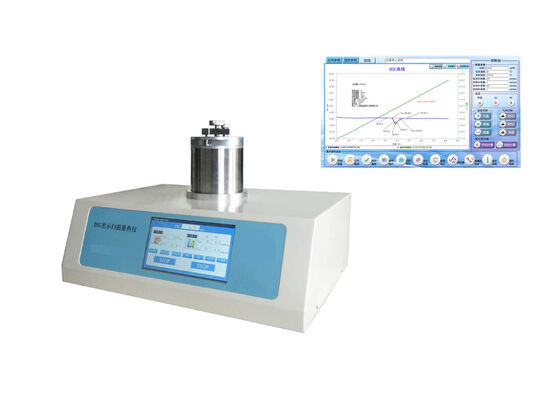
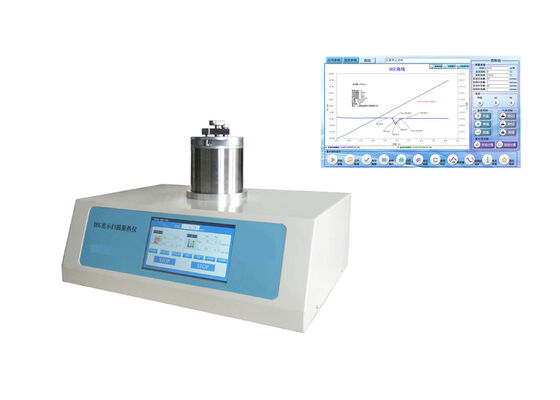
Máquina de Calorimetria de Escaneamento Diferencial Durável para Medição Térmica Precisa de Polímeros de Plástico e Teste de Materiais
Visão geral dos instrumentos
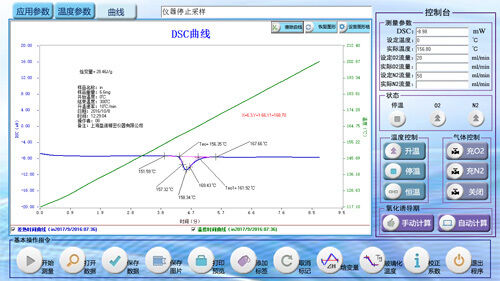
Calorimetria de varredura diferencial (DSC) é uma técnica clássica de análise térmica projetada para caracterizar os efeitos térmicos de materiais sob condições de temperatura programadas.É amplamente utilizado nos sectores da ciência dos materiais e da química, incluindo a I&D, otimização de processos, controlo de qualidade e análise de falhas, pela sua elevada precisão e versatilidade.
O DSC permite a investigação sistemática das principais propriedades dos materiais: transições de fase dos materiais inorgânicos, comportamentos de fusão e cristalização dos materiais poliméricos,polimorfismo de compostos farmacêuticos, e a proporção entre a fase sólida e a fase líquida de óleos e gorduras.
Perguntas Frequentes
P1: Qual é o princípio de funcionamento básico de uma máquina DSC?
A máquina DSC opera medindo a diferença de fluxo térmico entre uma amostra e um material de referência inerte, uma vez que ambos são submetidos a um ciclo de temperatura programado (aquecimento, arrefecimento,ou isotérmica)Isto permite uma análise quantitativa das alterações físico-químicas associadas ao calor na amostra, tais como transições de fase, fusão, cristalização e decomposição térmica.
P2: Que propriedades físicoquímicas fundamentais pode uma máquina DSC testar?
Pode quantificar com precisão parâmetros críticos, incluindo temperatura de transição do vidro (Tg), ponto de fusão (Tm), entalpia de fusão, comportamento de cristalização, entalpia de cristalização,Entalpia da transição de fase, estabilidade térmica, grau de cura/ligação cruzada e período de indução de oxidação (OIP).
P3: Qual é a gama de temperatura típica e a precisão de temperatura de uma máquina DSC padrão?
Os modelos padrão oferecem uma faixa de temperatura de -150 °C a 700 °C (extensivel para 1500 °C para variantes de alta temperatura).01 °C Garantizar um controlo preciso do ciclo de temperatura programado.
Q4: Quais materiais são compatíveis com os testes DSC?
É amplamente aplicável a polímeros (plásticos, borracha, fibras), materiais inorgânicos, ingredientes alimentares, óleos e gorduras, compósitos e outros materiais que requerem análise de propriedades térmicas,Controlo de qualidade e cenários de análise de falhas.
P5: A máquina DSC cumpre os padrões internacionais de ensaio?
Sim, é totalmente conforme com as principais normas internacionais, tais como ISO 11357 (polímeros), ASTM E967/E968 (métodos gerais DSC), GB/T 19466 (plásticos),e USP < 891> Garantir que os resultados dos ensaios são reconhecidos a nível mundial.
Q6: Qual é o requisito de amostragem para os testes DSC e como os dados são processados?
O peso recomendado da amostra varia de 2 a 10 mg (dependendo do tipo de material).1 μW) e software de análise profissional, que regista automaticamente as curvas de ensaio (fluxo de calor versus temperatura/tempo) e calcula os parâmetros-chave.
Q7: Que manutenção é necessária para a máquina DSC e qual é a vida útil dos componentes principais?
A manutenção de rotina inclui a calibração anual da temperatura e do fluxo de calor (usando materiais de referência padrão como o ídio) e a limpeza regular da panela de amostragem.Módulo de aquecimento/refrigeração) têm uma vida útil ≥ 50Fornecemos protocolos de calibração e apoio técnico para manutenção.
P8: A máquina DSC pode ser personalizada para necessidades específicas de teste?
Sim, estão disponíveis opções de personalização, incluindo faixas de temperatura alargadas (módulos criogénicos de baixa temperatura ou fornos de alta temperatura), panelas de amostragem especializadas (herméticas,resistente à pressão), e funções de software personalizadas (por exemplo, módulos de análise cinética para reações de curagem) adaptadas a cenários de aplicação únicos.


 Por favor verifique seu email!